
Northern lights, glacial landscapes, and a few surprises along the way. Discover the experiences and observations of Professor Patricia Reiff during Eclipse Tours’ October 2026 tour of Iceland.
It was after 1 a.m. when Professor Patricia Reiff began gently knocking on her fellow travelers’ hotel room doors. The group had come to Iceland with Eclipse Tours to see the northern lights, and the clouds had finally started to clear.
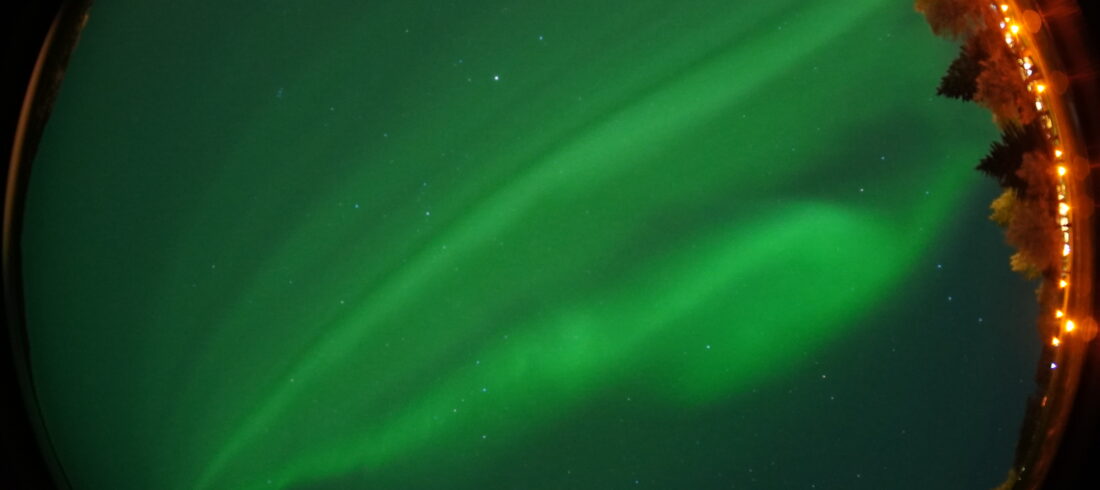
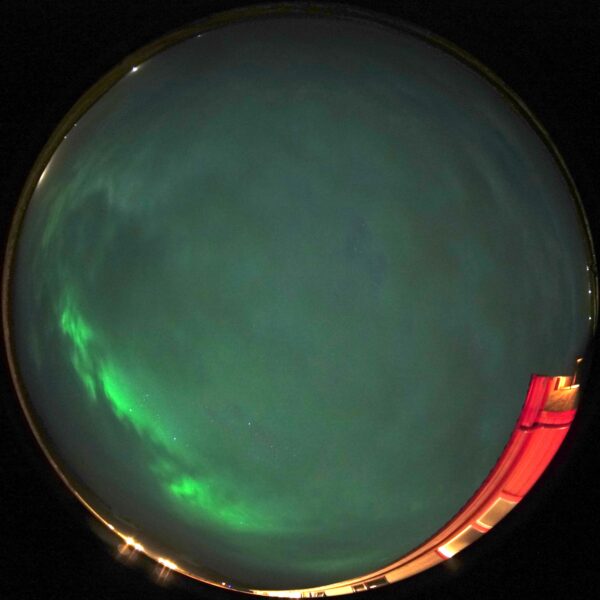
For those willing to leave their warm beds, the reward was a green arc stretching across the night sky. Others chose to stay tucked in after a long day of exploring, but Pat wasn’t quite ready to call it a night. She left her fisheye camera running, capturing a time-lapse sequence that revealed even more auroral activity before the clouds returned around 3:30 a.m.
It was one of several late nights spent watching the skies during the October 2026 tour, accompanied by Professor Reiff, Eclipse Tours’ Science Lead, and local guide Kristjan.
The group had come hoping to see the aurora borealis, but their journey would include far more than nighttime observations. Over the following days, they explored volcanic landscapes, waterfalls, glaciers, and coastal villages, all while navigating some particularly unpredictable weather.
As Pat wrote in her original tour report:
“The ‘Land of Fire and Ice’ did not disappoint.”
Autumn is a promising season for aurora watching in Iceland. With longer nights and favorable seasonal conditions, travelers have opportunities to see the northern lights, provided the weather cooperates.
On this particular tour, solar activity was encouraging. Iceland’s weather, however, had other ideas.
Rain, sleet, snow, and powerful winds accompanied the group throughout the journey. An unusually intense storm system moved through the region, occasionally requiring changes to their plans.
Fortunately, Kristjan knew how to navigate the shifting conditions. By adjusting routes and taking advantage of breaks in the weather, the group managed to visit nearly all the planned attractions, replacing just one excursion with an alternative activity.
And when the clouds did part, there was plenty to see.
The group’s first full day took them around Iceland’s famous Golden Circle. They visited the dramatic geological formations at Þingvellir, watched the geothermal activity at Geysir, and admired the powerful Gullfoss waterfall. There was even time to sample bread baked using geothermal heat and relax in a warm lagoon.
That evening, Pat gave a presentation on space weather and the science behind the aurora, helping the group understand what they would be looking for in the night sky.
Their first successful aurora sighting followed just hours later.
The travelers would have several more opportunities to watch the northern lights during their journey, including two nights near Lake Egilsstaðir, where clearer skies revealed green auroral arcs with touches of red.
From the lakeshore, Pat photographed the displays and documented their changing shapes with her all-sky camera. One particularly interesting formation was an omega band, named for the curling patterns that develop along the lower edge of the aurora.
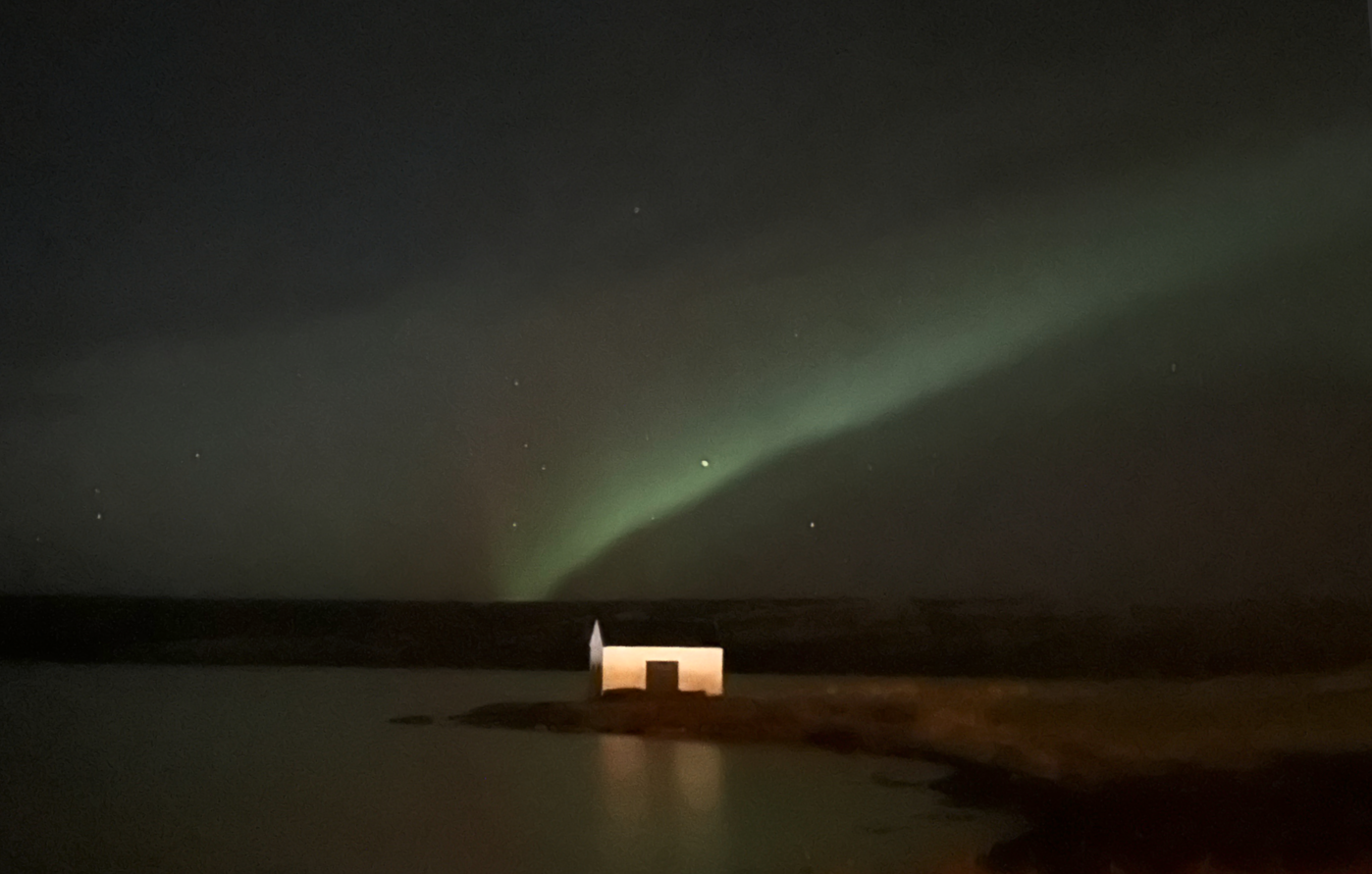
These structures are associated with electrical currents and processes occurring high in Earth’s atmosphere. To the casual observer, they create striking patterns in the sky. For scientists studying auroral activity, they offer clues about the forces behind the display.
Having Pat along meant travelers could ask questions, learn to recognize different formations, and better understand what was happening above them.
The clearer skies also provided an opportunity for another astronomical observation. Pat set up her telescope and captured an image of the Andromeda Galaxy, adding an unexpected deep-space highlight to the evening.
Of course, all that late-night skywatching came at a price. As Pat humorously observed in her report:
“try not to start too early the next morning after late night auroras…”
It was a lesson worth remembering when the group had another full day of sightseeing ahead.
While the aurora was a major reason for the trip, Iceland provided plenty to explore during daylight hours.
Along the southern coast, the group stopped at Skógafoss waterfall. Some travelers made the climb toward the top, while others preferred a walk through the surrounding canyon.
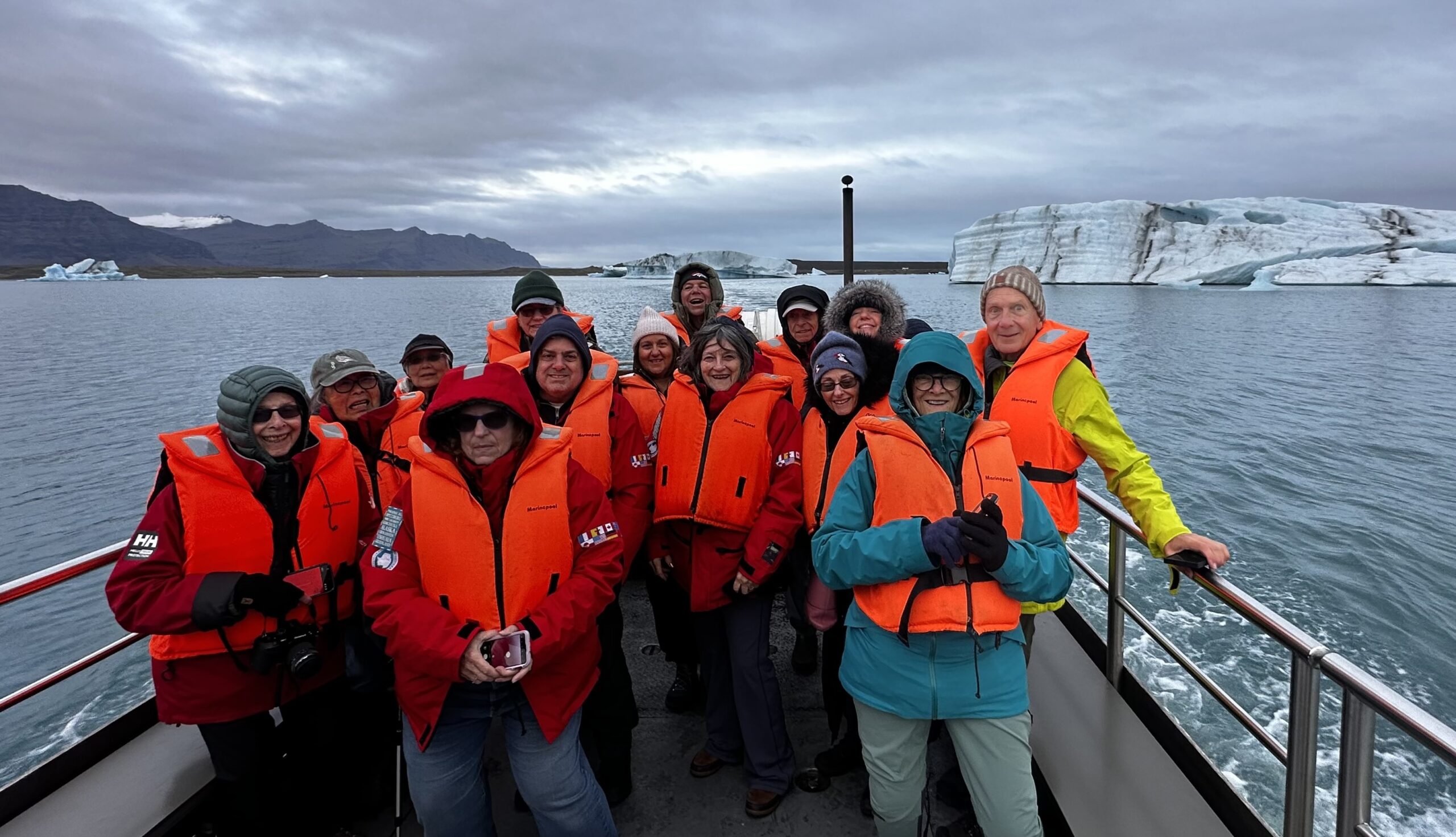
At the glacial lagoon, they boarded an amphibious vessel for a closer look at the floating icebergs. The constantly changing shapes sparked a little imagination, particularly one iceberg that appeared as though a giant bear had dragged its claws across the ice.
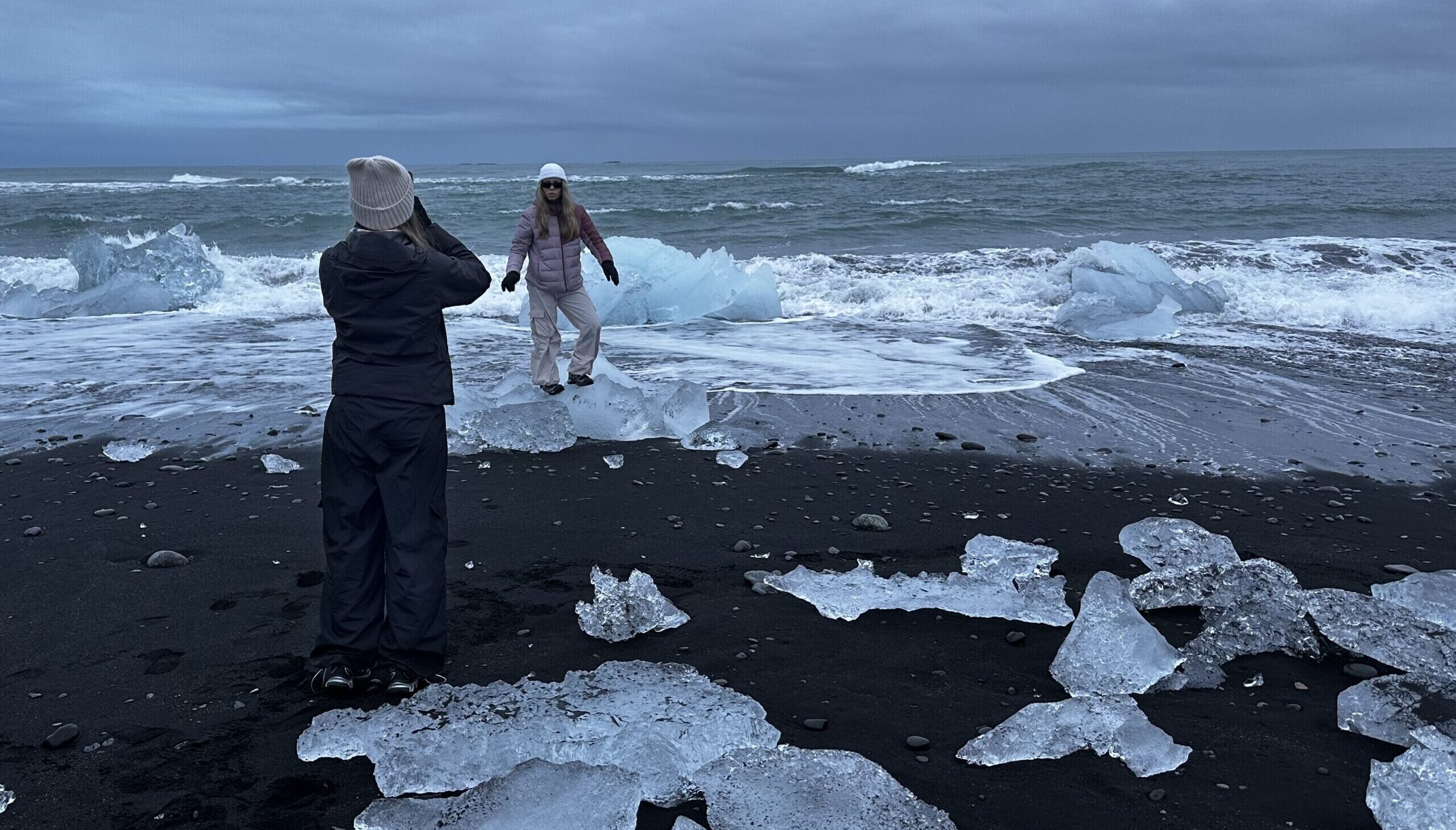
Nearby, Diamond Beach offered another unusual sight: pieces of ice scattered along the dark volcanic shoreline, some small enough to resemble glittering stones against the sand.
As the journey continued east, the group passed through quieter coastal communities, stopping along the way to explore local attractions.
In Djúpivogur, they enjoyed homemade soup and bread at a harbor restaurant, browsed a small museum with an attic full of antiques, and walked along a waterfront path decorated with large egg sculptures representing Iceland’s birdlife.
These stops offered a glimpse of everyday life in Iceland, away from the country’s more familiar landmarks.
Later, near Lake Egilsstaðir, the group visited Hengifoss waterfall and enjoyed a hike through the surrounding landscape. They also had time to relax at their hotel, where the spa proved particularly welcome after several busy days.
Further north, the scenery changed again.
In Akureyri, travelers explored a town where the traffic lights feature little red hearts. On the Snæfellsnes Peninsula, they visited a striking black church, wandered along a pale sandy beach, and discovered tiny purple sea stars near the shoreline.
One evening brought a stay at a farmhouse, where the group enjoyed home-cooked food, fresh bread, skyr, and a visit to a local thermal pool.
There were plenty of opportunities to experience Icelandic hospitality, whether over a shared meal, during a stop at a small museum, or while soaking in warm geothermal water after a day outdoors.
And between these experiences, there was always another waterfall, another stretch of coastline, or another interesting discovery just around the corner.
Iceland’s scenery may have been impressive, but the weather certainly kept everyone on their toes.
As the group traveled north toward Mývatn, conditions became increasingly challenging. Heavy rain turned to sleet, strong winds swept across the landscape, and even the local wildlife seemed eager to find shelter.
At one hotel, a reindeer took refuge near the restaurant entrance. Someone eventually fed him, which, according to Pat, made him a rather persistent visitor for the remainder of their stay.
The following day, the travelers continued exploring the Snæfellsnes Peninsula, including a visit to Snæfellsjökull National Park.
There, they walked along a rugged coastal path, encountered remnants of a shipwreck dating back to 1948, and watched powerful waves break against the shoreline.
The journey concluded with a farewell dinner, giving everyone a chance to share stories from the trip and thank the people who had made it possible.
By then, the group had seen the northern lights on several occasions, explored much of Iceland, and experienced everything from bright rainbows to winter storms.
They had also shared late-night skywatching sessions, good meals, unexpected discoveries, and the occasional change of plans.
Perhaps the best summary comes from Pat herself. In the closing lines of her original report, she thanked Eclipse Tours for arranging the journey, describing it as:
“an adventure to remember!”
Given everything the group had experienced along the way, it’s easy to understand why.
This article was adapted from Professor Reiff’s firsthand tour report. Photography and observations were contributed by Professor Reiff and fellow travelers.

Professor Patricia Reiff is a Science Lead for Eclipse Tours, sharing her knowledge of space weather and the aurora borealis with travelers interested in astronomy and natural phenomena.
During the October 2026 Iceland tour, she gave educational presentations, helped the group observe the northern lights, and documented auroral activity through photography and time-lapse imaging.
Discover More with Eclipse Tours
Interested in seeing the northern lights for yourself?
Explore our expert-led tours and discover journeys that combine fascinating destinations with opportunities to learn more about the natural world.